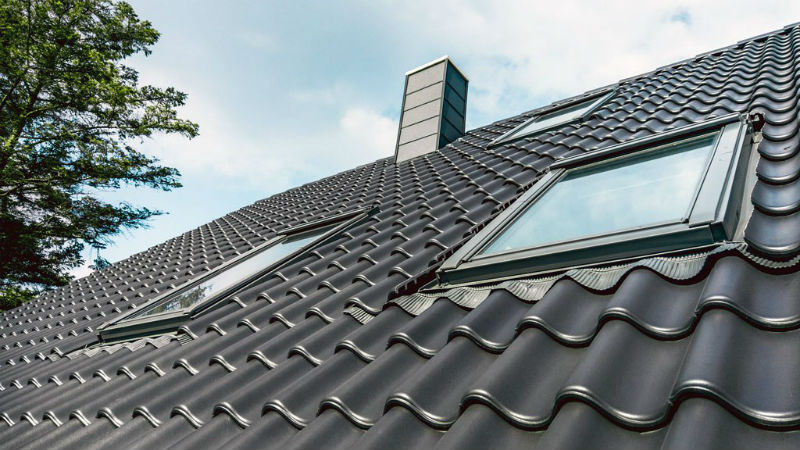
Tile roof valleys are designed to collect water from adjoining slopes and direct it toward the roof edge. On many Peoria homes, metal valley flashing sits beneath rows of clay or concrete tiles that have been cut to follow the valley’s angle.
Because much of the metal remains concealed, corrosion can develop without creating obvious changes on the visible roof surface. Dust, broken tile fragments, plant material, and moisture may collect beneath the cut tiles and remain against the metal. Over time, this environment can weaken the valley and affect its ability to manage rainwater.
Understanding how concealed valley corrosion develops can help homeowners recognize why this area deserves attention during residential roofing evaluations.
How Does a Tile Roof Valley Work?
A roof valley forms where two sloped roof sections meet. Water from both sections travels toward this channel, giving the valley an important drainage role.
Tile roofs typically use an open or closed valley arrangement. In an open valley, a visible strip of metal remains between the cut tile rows. In a closed or tighter arrangement, tiles extend closer to the center, concealing more of the flashing.
The metal beneath the tiles provides a pathway for water that reaches the valley. Underlayment beneath the flashing offers another layer of moisture protection. These components must work together while allowing water and small amounts of debris to leave the roof.
Why Does Debris Collect Beneath Cut Tiles?
Cut tiles do not always form a perfectly sealed edge. Their shape can create small spaces where wind carries dust, leaves, seeds, and other debris beneath the surface.
Peoria’s dry conditions make dust accumulation particularly common. When rain reaches the valley, the dust can combine with plant material and form dense buildup. This material may hold moisture against the metal longer than the valley design intended.
Broken tile pieces can also slide into concealed areas. If these fragments restrict water movement, moisture may settle along flashing seams, fasteners, or low points. The valley may continue to look normal from above while deterioration progresses underneath.
How Does Trapped Moisture Contribute to Corrosion?
Metal valley flashing is intended to encounter water, but it should also drain and dry. Problems can arise when wet debris remains in continuous contact with the surface.
Trapped moisture creates conditions that support oxidation. Protective finishes may deteriorate, exposing the underlying metal. Repeated wetting and drying can gradually create discoloration, surface pitting, or weakened areas.
Corrosion may be concentrated around scratches, cut edges, fasteners, and places where the protective coating has worn away. Once the metal becomes thin, small openings can develop and allow moisture to reach the underlayment or deck below.
Can Cut Tiles Damage the Valley Metal?
Improperly positioned tile pieces may rest directly on the metal valley. As roofing materials move with temperature changes, the tile edge can scrape the protective finish.
Foot traffic may also press a cut tile against the flashing. Even when the tile does not break, contact pressure can dent or scratch the metal underneath.
Tile pieces should remain stable and allow water to move through the valley. If they shift toward the center, they may narrow the drainage channel or trap debris. Correct placement is therefore important for both appearance and water management.
Valley Roofing & Repair provides a roofing residential overview explaining how desert conditions affect homes in Peoria. They discuss common materials, weather exposure, and warning indicators homeowners may observe.
What Other Materials Can Affect the Valley?
Mortar, sealants, fasteners, and dissimilar metals can influence valley performance. Mortar used to secure tile pieces may crack or separate, allowing debris to enter beneath the cut edge. Excess material may also restrict the intended drainage path.
Fasteners placed in low areas of the valley can create vulnerable points. Water moving through the channel may repeatedly pass over these penetrations.
Contact between incompatible metals can contribute to accelerated deterioration in certain conditions. Roofing professionals should examine the entire assembly to determine whether corrosion is associated with trapped debris, damaged finishes, material contact, or another cause.
What Warning Signs May Appear?
Concealed corrosion may not be visible until it affects nearby components. Homeowners can still watch for exterior and interior indicators, including:
- Rust-colored staining in the valley
- Water moving beneath cut tiles
- Debris packed along tile edges
- Loose or slipping tile pieces
- Bent or exposed flashing
- Moisture stains in the attic
- Ceiling discoloration below a valley
- Soft or deteriorated roof decking
- Previous patches that are separating
A stain inside the home may appear away from the damaged metal because water can travel along the underlayment, deck, or framing before becoming visible.
Why Is Surface Cleaning Sometimes Insufficient?
Removing visible debris from an open valley can improve drainage, but it may not reveal what is happening beneath the cut tiles. Packed material can extend several inches under the tile edges.
Cleaning also cannot restore metal that has already become thin or perforated. If corrosion is present, roof repair may require removing nearby tiles, examining the flashing and underlayment, and replacing affected components.
Applying sealant over rust does not correct ongoing material deterioration. The area should first be evaluated to determine the extent of the corrosion and whether moisture has reached the layers below.
How Is a Corroded Tile Valley Evaluated?
A roofing professional may begin by examining the visible channel, cut tile edges, flashing, and drainage path. Selected tiles may need to be removed carefully so concealed portions of the valley can be viewed.
The evaluation should consider:
- The depth and location of corrosion
- The condition of the underlayment
- The stability of the cut tiles
- Debris beneath the tile edges
- Flashing seams and fasteners
- Signs of moisture on the deck
- The width of the drainage channel
Photographs can document the observed conditions. A written estimate can then explain whether the valley needs focused cleaning, tile repositioning, flashing replacement, underlayment work, or broader repairs.
Can Valley Problems Be Reduced?
Keeping visible valleys clear can help water move away from the roof. However, homeowners should avoid walking on tile because individual pieces can crack or shift under pressure.
Periodic evaluations can identify accumulated debris, loose cut tiles, and early metal deterioration. This is especially helpful after strong winds or heavy seasonal rainfall.
The goal is to preserve an open drainage route and prevent materials from remaining wet beneath the tile. Timely attention may help protect unaffected flashing, underlayment, and decking.
Schedule a Tile Roof Valley Evaluation
If a tile valley shows rust staining, packed debris, displaced pieces, or signs of moisture, schedule an evaluation with a qualified roofing professional. They can inspect the visible channel and concealed components to determine the source and extent of the problem.
A documented evaluation can help clarify whether the valley requires cleaning, focused repair, or replacement of deteriorated materials.